

Follow us
Stay connected with our latest news & stories from Jean-Micheal Cousteau Resort Fiji



STORIES
Tamanu (Fijian: Dilo)
Tamanu (Fijian: Dilo)
Characteristics
| Large, low-branching, slow-growing, evergreen tree, containing essential oils (culturally important tamanu oil). Crown broad and irregular. Usually 10-20 m tall. White flowers. Fruit is a round, green drupe (2-4 cm) with one single seed. |
Because of ist decorative leaves, fragrant flowers and spreading crown, it is a famous ornamental plant around the world.
Distribution
Native to tropical Asia. Now, widely cultivated in all tropical regions of the world.
Natural Medical Properties
| Commonly used in traditional medicine. Many of these uses have been supported by modern research into the plant.
Coumarins isolated from the leaves and seeds have been shown to be inhibitors of HIV type 1. They might also be valuable as cancer chemo-preventive agents. Seed extracts showed significant molluscicidal activity; the hydroxy acid caliphyllid acid was isolated as the active compound. The ether extract of the leaves showed piscicidal activity. The oil has cicatrizing properties, explaining its traditional and modern use in a wide range of skin problems. The oil has also shown anti-inflammatory, antifungal, antibacterial and insecticidal activity. It stimulates phagocytosis of cells of the reticulo-endothelial system and has protective activity on the vascular system. Clinical tests showed that the oil may reduce old scars. The refined oil, which is pale yellow, has strongly diminished medicinal properties. The bark is astringent and contains 11 – 19% tannins and is reportedly antiseptic and disinfectant. The oleoresin from the bark, which contains benzoic acid, shows cicatrizing properties. The latex and pounded bark are applied externally on wounds, ulcers and to treat phthisis, orchitis and lung affections, and are also used internally as a purgative, after childbirth and to treat gonorrhoea. Heated leaves are applied as a poultice to cuts, sores, ulcers, boils and skin rash. The leaves are used in inhalations to treat migraine and vertigo. The seed oil is applied externally as an analgesic against rheumatism and sciatica, and as a medication against swellings, ulcers, scabies, ringworm, boils and itch. |
Did you know?
Due to its importance as a source of timber (traditional shipbuilding), it has been spread in prehistoric times by the migrations of the Austronesian peoples to the islands of Oceania and Madagascar.
Literature
World Flora Online
WorldChecklist of Selected Plant Families
A working list of all plant species
AWARDS
A chorus of acclaim with prestigious awards
Each recognition echoes the resort's unwavering commitment to environmental responsibility and authentic Fijian experiences.

SUBSCRIBE
Stay up to date
To stay in touch and be inspired by our latest news & stories from Jean-Micheal Cousteau Resort Fiji, please register your interest.
Jean-Michel Cousteau Resort, an island paradise of relaxation and immersive exploration. Our award-winning Kids Bula Club features eco-programmes for young adventurers, with exclusive nannies for children under 6 and Fiji buddies for older kids and teens included in our all-inclusive rates.
DIRECT CALL
USA & Canada Toll-free (800) 246 3454
Australia Local call fee +613 9010 6228
Fiji +679 8850 174
WhatsApp +679 992 8280
EMAIL
bula@fijiresort.com
LOCATION
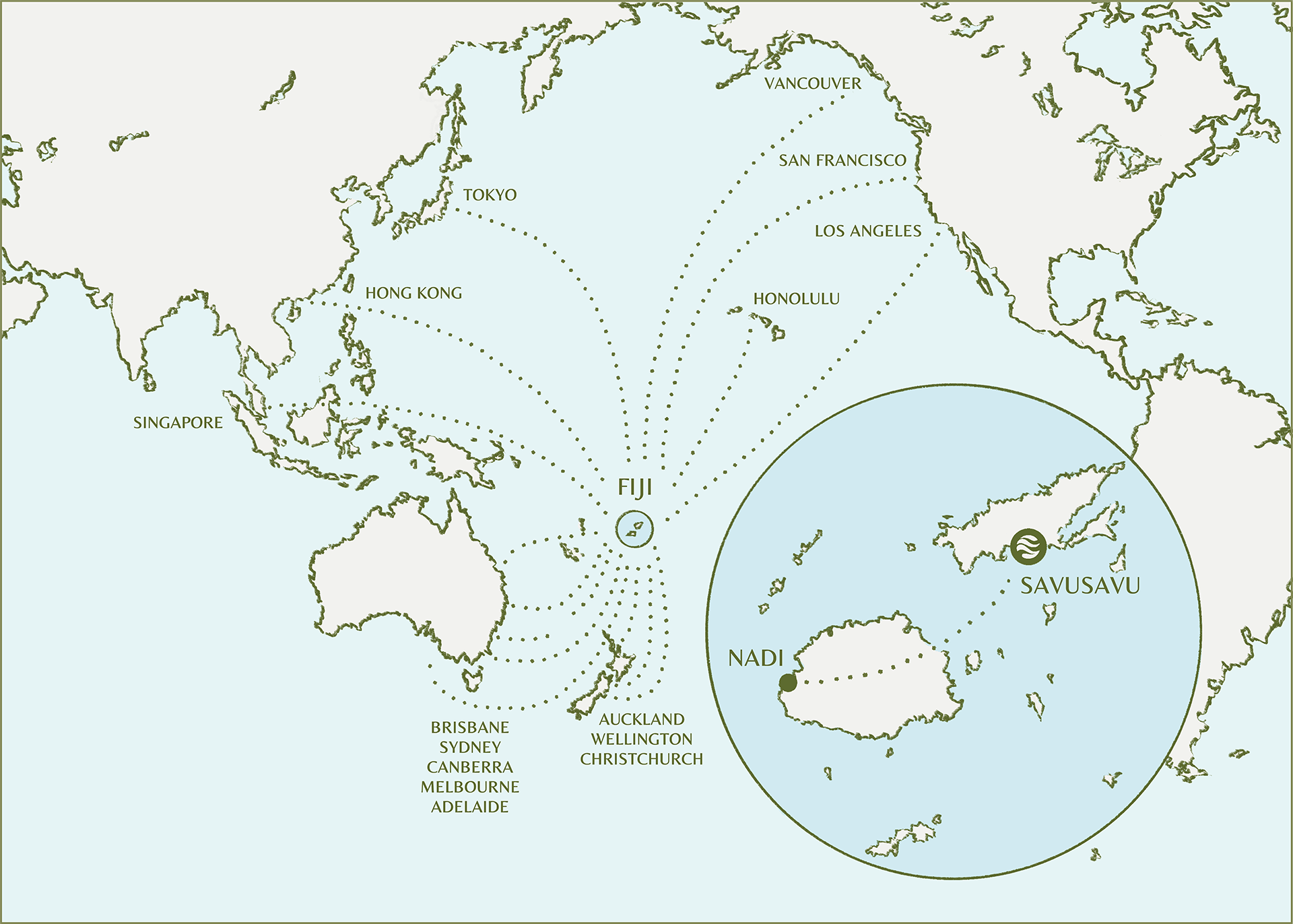
Lesiaceva Point Road, Savusavu, Vanua Levu, Fiji Islands